What it is and who it's for
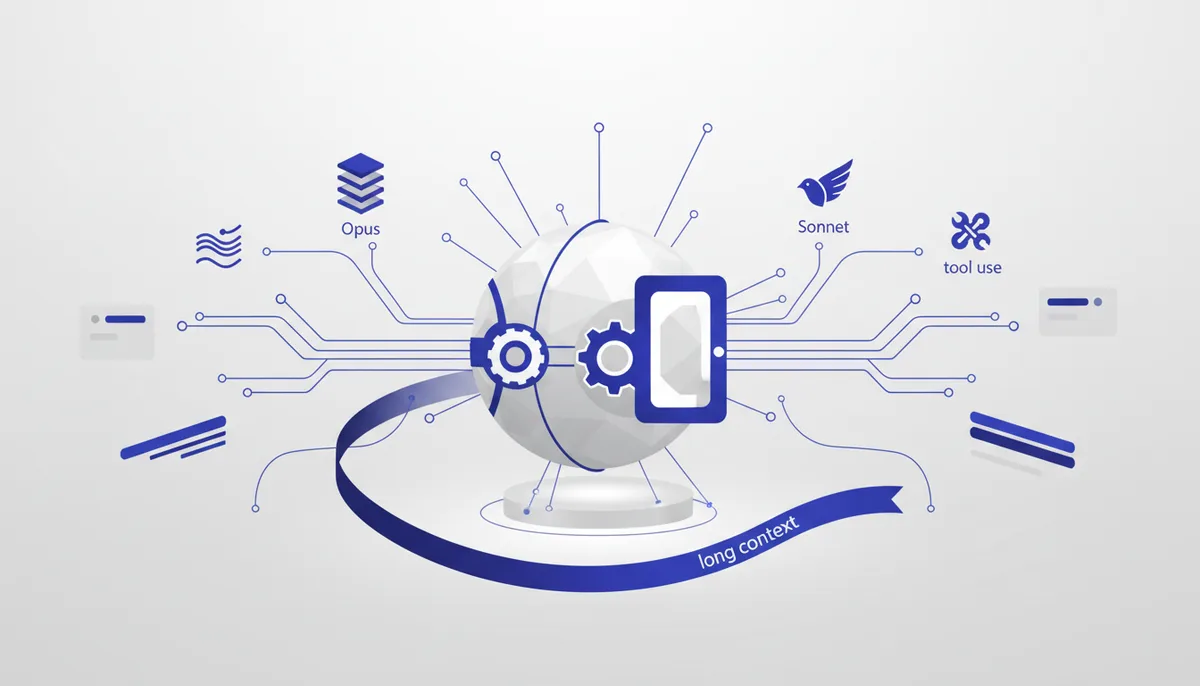
The Anthropic API is direct access to the Claude family (Opus — the smartest, Sonnet — the balanced one, Haiku — fast and cheap) with no middleman. It's for developers and teams who need top-tier reasoning and coding quality, a large context window, reliable tool use and predictable billing straight from the source. Claude consistently sits at the top of the blind LMArena rankings and dominates agentic coding benchmarks, which makes it the default when the stakes are high.
Key capabilities
- The Claude models: Opus (maximum intelligence), Sonnet (price/quality), Haiku (speed, low cost).
- A large context window and strong handling of long documents and codebases.
- Tool use (function calling), structured output, vision, agentic workflows.
- Prompt caching and batch mode — serious savings on repeated context and bulk jobs.
- Official SDKs (Python/TS) plus access through Amazon Bedrock and Google Vertex AI.
- Leading results on coding benchmarks (SWE-bench) and in the blind LMArena.
Get started in 5 minutes
- Create an account and a key at console.anthropic.com.
- Call the model:
curl https://api.anthropic.com/v1/messages \
  -H "x-api-key: $ANTHROPIC_API_KEY" \
  -H "anthropic-version: 2023-06-01" \
  -H "content-type: application/json" \
  -d '{"model":"claude-opus-4-6","max_tokens":256,"messages":[{"role":"user","content":"Hello"}]}'
- To save money, turn on prompt caching for repeated system context.
When to use it and when not to
- ✅ Use it if you need the best code and reasoning quality, long context and dependable tool use.
- ✅ Use it if you're building an agent and consistent behavior and instruction-following matter.
- ❌ Skip it → go with "OpenRouter" if you want to switch cheaply between different providers on one key and have fallbacks.
- ❌ Skip it → go with "Google AI Studio"/"OpenAI Platform" if you're tied to their ecosystem (Gemini/GPT, specific multimodal features).
The honest price
Billed by tokens, differentiated by model (Opus costs more, Haiku less); prompt caching and batch mode cut the bill substantially. Exact figures are on the provider's site and change over time.
Pitfalls
- Opus is noticeably more expensive — for simple tasks reach for Sonnet/Haiku instead of firing the big gun.
- Without prompt caching you overpay for a large repeated system prompt.
- Model names and versions get updated — pin a specific version in your config.
- It's the cloud: sensitive data leaves your perimeter — check your compliance (or use Bedrock/Vertex inside your own account).
🤖 Prompt accelerator
"I'm wiring the Anthropic API into <my app/agent>. Help me pick the Claude model for
and my budget (Opus/Sonnet/Haiku), give me a minimal Messages API call in <Python/Node> with tool use and structured output, and show me how to turn on prompt caching for the system context to cut costs. Estimate token usage for a typical request."