What it is
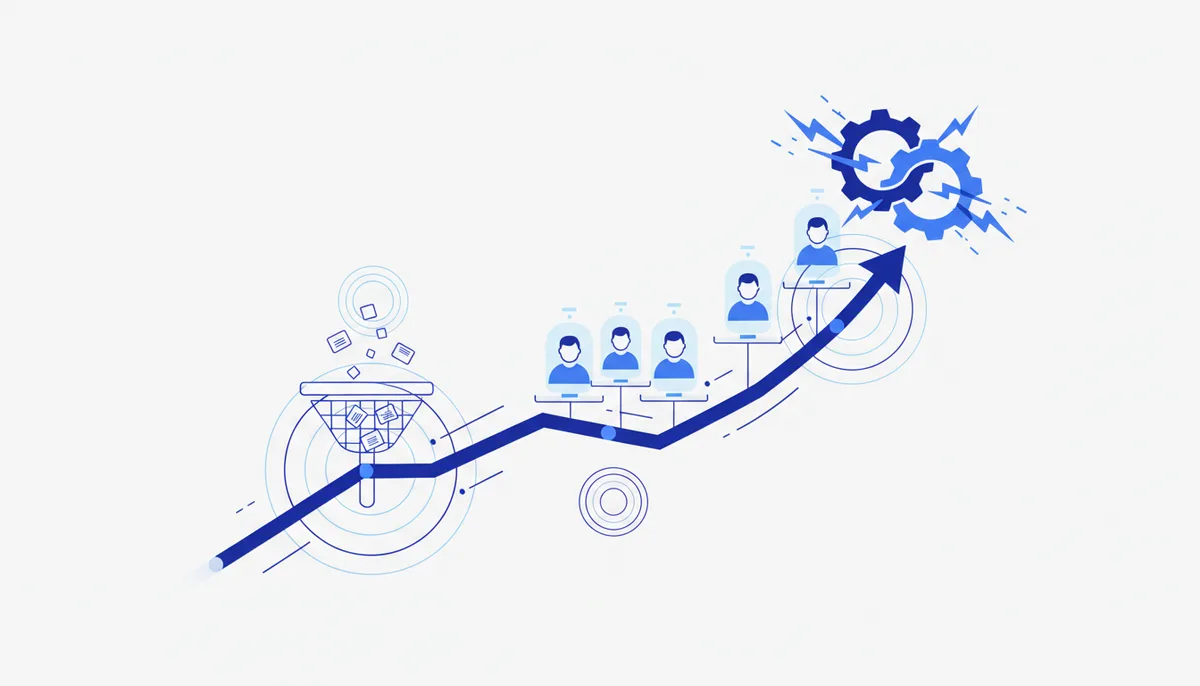
AI in hiring: automated resume screening, automated candidate sourcing, job description generation, candidate communication, onboarding automation (access, checklists, training). It covers a recruiter's routine from sourcing to the new hire's first day.
Where it came from
ATS systems have been around for ages, but the GenAI wave of 2023-25 gave them a "brain": not just a keyword filter, but generation, dialogue and evaluation. HR tech (Workday, Eightfold, HireVue) baked AI into the whole cycle.
Why it took off
Per 2025 surveys, 99% of US hiring managers use AI; 51% use it in recruiting. The metrics: up to -75% on time-to-hire, onboarding shorter by up to 80%, +50% on quality of hire. 54% of companies are growing their AI recruiting budget by 40%+. The pain is obvious: application volume exploded, and there are no extra humans to review it.
How to use it right now
- Start with the routine: job descriptions, first-pass screening, automated status updates to candidates.
- Onboarding — automate checklists and access provisioning (fast ROI).
- Keep the final decision and the interview with a human: the "AI screening + human" combo cuts time-to-hire by 40% and raises retention.
- Test your AI for bias — otherwise you are automating discrimination.
What to watch out for
The algorithm arms race: 41% of candidates admitted to embedding hidden prompt injections in their resumes to get past AI screening; 46% of job seekers have lost trust in hiring because of AI. Bias risks are regulated (NYC Local Law 144; the EU AI Act classifies HR AI as high-risk). You need auditing and transparency.