What happened
On June 18, 2026 Google shut down Gemini CLI for individual users: the tool stopped serving requests on the free tier and on the paid Google AI Pro and Google AI Ultra subscriptions. This was stated in the official announcement in the project's GitHub repository (Discussion #28017) and confirmed by TechTimes and 9to5Google.
In place of Gemini CLI, Google is pushing Antigravity CLI — a new tool that ships as part of the Antigravity 2.0 platform. The key differences:
- Antigravity CLI is written in Go and ships as a closed-source binary, whereas Gemini CLI was an open-source TypeScript project.
- In the terminal you invoke it with the
agycommand. - The architecture is built for asynchronous multi-agent scenarios — several agents talk to each other and split up the work. Google's official wording: "your needs have changed. Now you need multiple agents talking to each other, breaking down the work and solving complex tasks."
Antigravity CLI promises to automatically carry over user-installed skills, MCP server configurations, agent profiles and compatibility with gemini.md memory files. But by Google's own admission there is no "full feature parity out of the box."
Enterprise customers are unaffected: Gemini Code Assist license holders and API-key access work as before. According to 9to5Google, the consumer version follows a two-stage schedule: service stops on June 18, and on July 17 the remaining features go dark (including code review in Gemini Code Assist for GitHub).
Why it matters
- Open source turned proprietary. Gemini CLI was a public project with a large community — per trade press, around 105,000 stars on GitHub. Replacing it with a closed binary drew complaints: the code was written under Apache 2.0, and the signed CLA gave Google the legal ability to ship a closed product based on that work.
- Limits were cut. The free Gemini CLI tier allowed roughly up to 1,000 model requests a day. Antigravity CLI moves free users onto a smaller "compute" budget; Google has published no official numbers, and some outlets (TechTimes) estimate the new ceiling as radically lower.
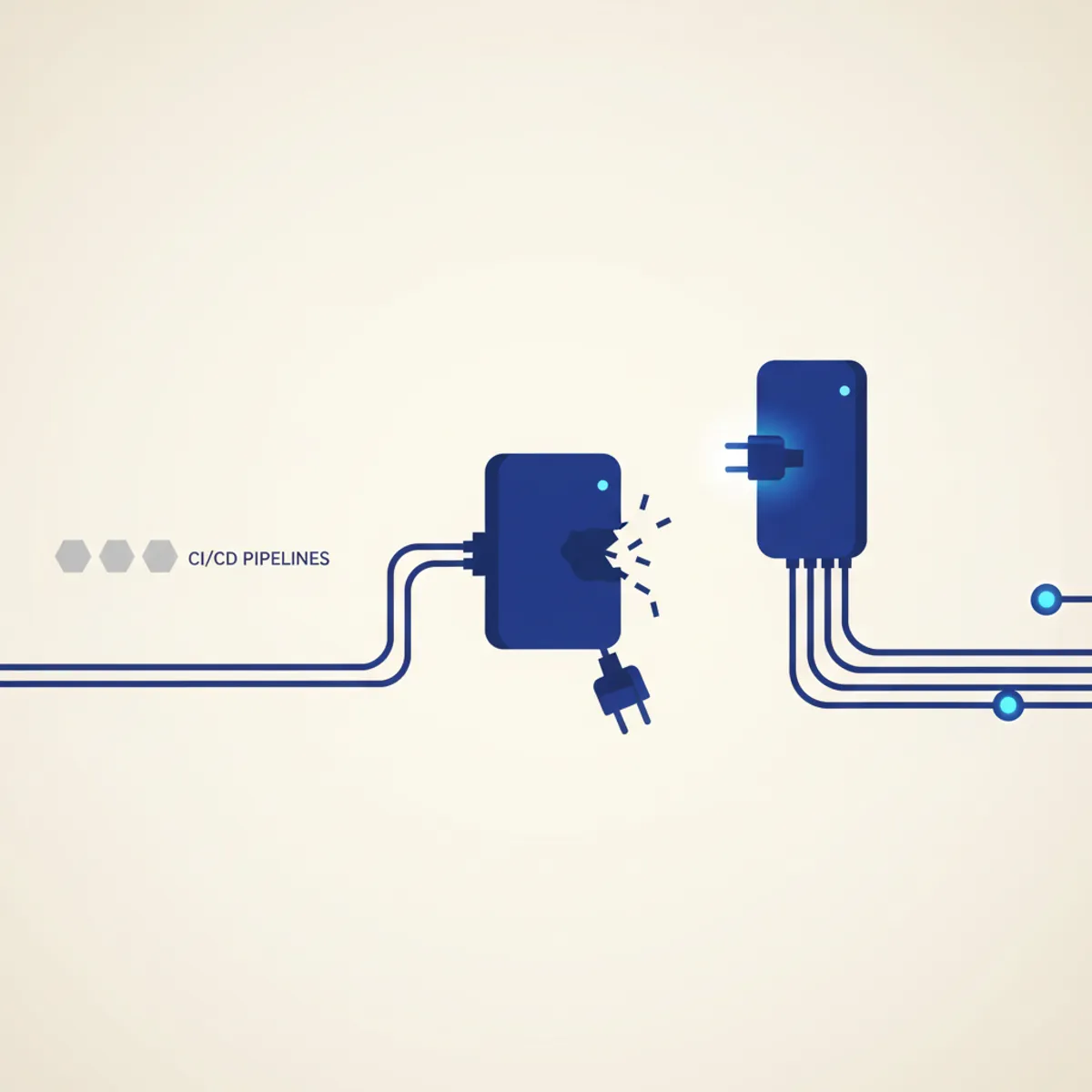
- Automation breaks. The changed MCP configuration in the new CLI silently breaks CI/CD pipelines — scripts tied to the old Gemini CLI stop working without an explicit error until you fix the settings.
- The community is unhappy. The official GitHub discussion collected dozens of downvotes and complaints that Antigravity CLI is still raw: features are missing,
agydoes not show a diff before writing to a file, and "the transition could have been handled far more carefully."
What it means for vibe coding
If you were running Gemini CLI together with MCP servers, check your pipelines first. The MCP config is what breaks most often during the move.
Step by step:
- If your CI/CD runs on Gemini CLI under a free/Pro/Ultra account, it is already dead; move to
agy(Antigravity CLI) or to paid Gemini API keys. - Verify the MCP server migration by hand: automatic migration is promised, but re-check the configs so you do not hit silent build failures.
- Plan for a lower request limit on the free tier — keep heavy agent runs on a paid key.
gemini.mdmemory files are said to be compatible — but test on one project before migrating everything.- Teams on Enterprise Gemini Code Assist need not panic: none of this applies to you.
The broader takeaway for vibe coders: tying your workflow to a single vendor's CLI is a risk. The Gemini CLI story shows that even a popular open-source tool can be shut down and replaced with a proprietary one in a matter of weeks. Keep MCP configs, skills and prompts in a portable form so that migrating between agents (Antigravity, Claude Code and others) costs you hours, not days.