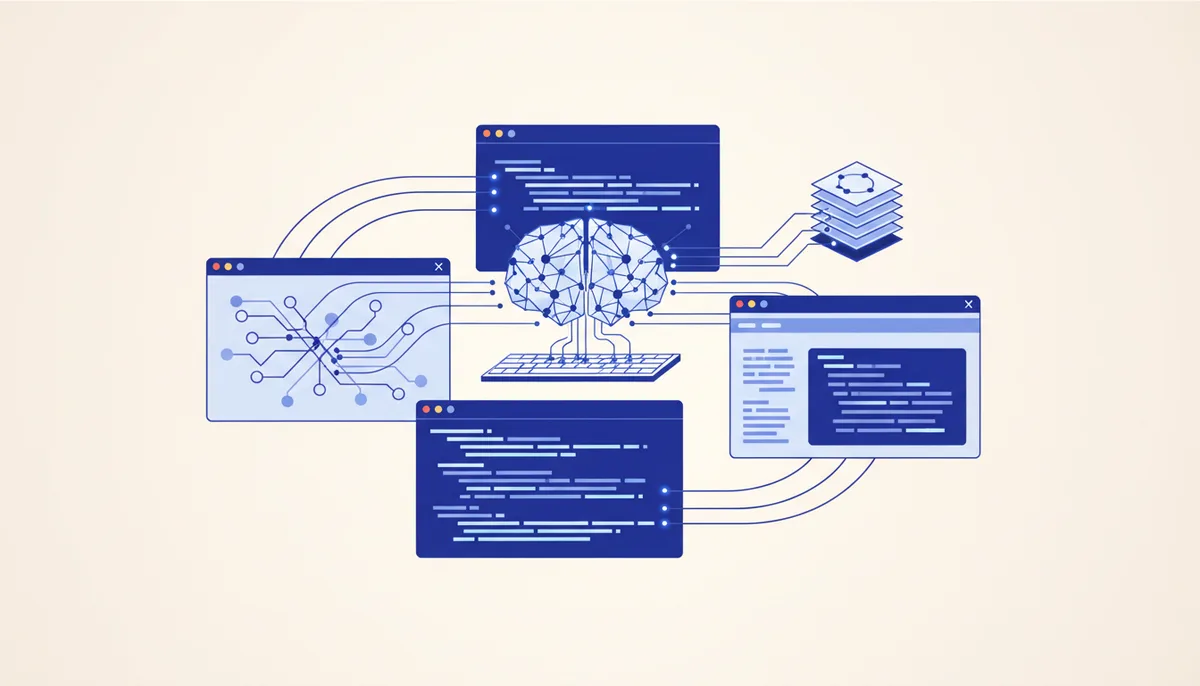
In a world where hundreds of new AI tools appear every day, finding the one that actually solves a pain instead of creating a new one is no easy task. That goes double for agents: many of them demand constant attention, are tied to your local machine, or forget context almost immediately. Hermes Agent by Nous Research promises to close those gaps with a self-teaching AI agent that grows with you, remembers your preferences and works in the background wherever you are.
What it is
Hermes Agent is an AI agent built by Nous Research and positioned as "the agent that grows with you" github.com/nousresearch/hermes-agent. The project has struck a serious chord: 215,981 stars and 40,358 forks on GitHub, 832 watchers and 23,184 open issues github.com/nousresearch/hermes-agent. Those are not just numbers — they are a marker of an active community and broad interest in a project that was created on 22 July 2024 and already has 21 releases, the latest being v2024.7.7.2, shipped on 8 July 2024 github.com/nousresearch/hermes-agent. The primary language is Python (82.0%), with TypeScript, JavaScript, Shell and others in the mix github.com/nousresearch/hermes-agent. The project is under the MIT License github.com/nousresearch/hermes-agent.
How it works
The defining feature of Hermes Agent is its built-in learning loop. It does not merely execute commands — it creates skills out of experience, refines them as they get used and actively persists knowledge. The agent searches its own past conversations and builds a deepening model of who you are across sessions github.com/nousresearch/hermes-agent. Several mechanisms make that happen:
- A closed learning loop: the agent curates its memory, refreshing it periodically, autonomously creates skills after finishing complex tasks, and those skills self-improve as they are used github.com/nousresearch/hermes-agent.
- Cross-session recall: FTS5 search across sessions with LLM summarisation to recall information from past interactions. Honcho dialectical user modelling is used as well github.com/nousresearch/hermes-agent.
- Model flexibility: use any model you want — Nous Portal, OpenRouter, OpenAI, your own endpoint and plenty more. Switching between them is a
hermes modelcommand away, with no code changes and no lock-in to a single provider github.com/nousresearch/hermes-agent. - Distributed operation: the agent can run on a $5 VPS, a GPU cluster or serverless infrastructure that costs almost nothing while idle. It is not chained to your laptop — you can talk to it over Telegram while it runs on a cloud VM github.com/nousresearch/hermes-agent.
- Delegation and parallelism: Hermes Agent lets you spin up isolated subagents for parallel workstreams. You can write Python scripts that call tools over RPC, collapsing multi-step pipelines into steps that cost "zero" context github.com/nousresearch/hermes-agent.
Quick start
Installing Hermes Agent is about as simple as it gets. On Linux, macOS, WSL2 and Termux one command does it:
curl -fsSL https://hermes-agent.nousresearch.com/install.sh | bash
Once installed, you can start working with the agent through the interactive CLI:
hermes # Interactive CLI — start a conversation
hermes model # Pick an LLM provider and model
hermes tools # Configure which tools are enabled
hermes config set # Set individual config values
hermes config get # Print individual config values
hermes gateway # Start the message gateway (Telegram, Discord, etc.)
hermes setup # Run the full setup wizard (configures everything at once)
hermes claw migrate # Migrate from OpenClaw (if you were using OpenClaw)
hermes update # Update to the latest version
hermes doctor # Diagnose any problems
Honestly: the limitations
- LLM dependency: although Hermes Agent supports many models, its performance and the quality of its learning hinge directly on the underlying LLM you pick. A weak model means the agent never shows its full potential.
- Setup complexity for newcomers: the installer is simple, but deep configuration of tools, gateways and integrations can demand a certain level of technical knowledge, especially when deploying on non-standard platforms.
- Potential cloud costs: the agent can live on a cheap VPS, but heavy LLMs and intensive workflows can rack up meaningful API and cloud spend if you do not watch consumption.
Who it is for
Hermes Agent is a great fit for developers, researchers and enthusiasts looking for a flexible, self-teaching AI agent that can automate routine tasks, manage projects and provide personalised help. It is especially useful for anyone who wants an agent that remembers context between sessions and can run in a distributed environment. And if you want to get moving fast with ready-made rules, roles and skills for vibe coding, the qvib.pro engines can help you fold Hermes Agent into your workflows sooner, without assembling everything by hand.
Alternatives: CodeWhale (for coding in the terminal) [github.com/Hmbown/CodeWhale], Open Multi-Agent (for orchestrating TypeScript backends) [github.com/open-multi-agent/open-multi-agent], Cerebro MCP (for unifying MCP + A2A) [github.com/Synvoya/cerebro-mcp].