What it is and who it's for
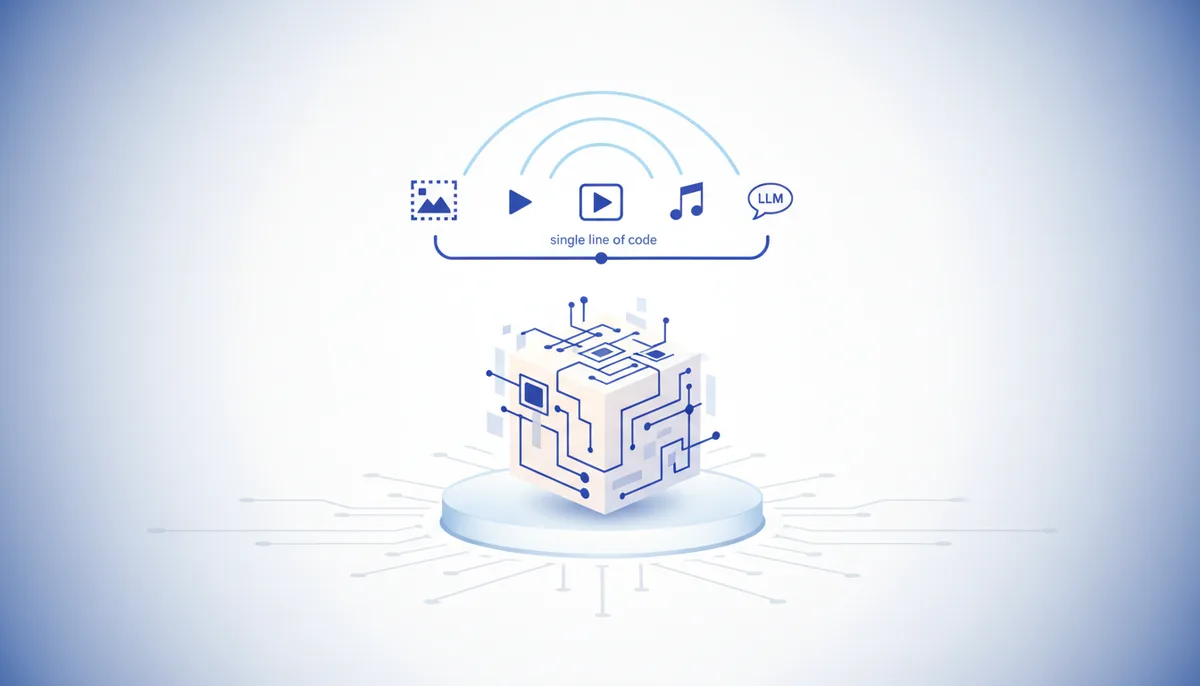
Replicate is a cloud where thousands of open models (images, video, audio, LLMs, upscaling) run over an API in a single line, with no GPU or environment to babysit. It's for developers who need to fire off SDXL, FLUX, Whisper or a video model from their own code and pay only for the seconds it runs. What stands out is the enormous catalog of community models and Cog, the format you can package any model into yourself.
Key features
- Thousands of ready models across every modality, launched with one API call.
- Billing by GPU-second — no idle servers.
- Official "always-on" models with a stable API and low latency.
- Cog — package your own model into a container and publish it as an API.
- Webhooks on job completion (for heavy async generations).
- Ready-made clients for Python and Node.
Get started in 5 minutes
- Sign up at replicate.com and grab an API token.
- Install the client and call a model:
pip install replicate
import replicate
out = replicate.run("black-forest-labs/flux-schnell", input={"prompt":"a cat astronaut"})
print(out)
- For heavy jobs, pass a
webhookso you get the result asynchronously.
When to use it, when not to
- ✅ Use it if you need to run a mix of models (video/audio/images/LLMs) from code without your own GPU infrastructure.
- ✅ Use it if you want to publish your own model as an API through Cog.
- ❌ Skip it → Together AI is better if what you really need is LLM fine-tuning and dedicated production endpoints.
- ❌ Skip it → ComfyUI (running locally) is better if zero per-generation cost and full control over the image pipeline matter.
Honest pricing
You pay for GPU runtime (by the second), and the rate depends on the GPU type and the model; the cold start of a rarely used model is billed too. Exact numbers are on the provider's site and keep changing.
Gotchas
- A cold start on an unpopular model adds seconds or minutes of waiting — and cost.
- Community models vary in quality and stability — the official ones come with a firmer SLA.
- Pin the model version (by hash) — authors push updates and behavior can drift.
- Run heavy generations asynchronously via webhooks, otherwise you'll hit timeouts.
🤖 Prompt accelerator
"I want to use Replicate from <Python/Node> to handle <image generation / audio transcription / video>. Pick a specific model from their catalog, show a call with the right
inputparameters, explain how to pin the model version by hash and how to handle the result asynchronously via a webhook. Estimate how many GPU-seconds one call will take."