What it is
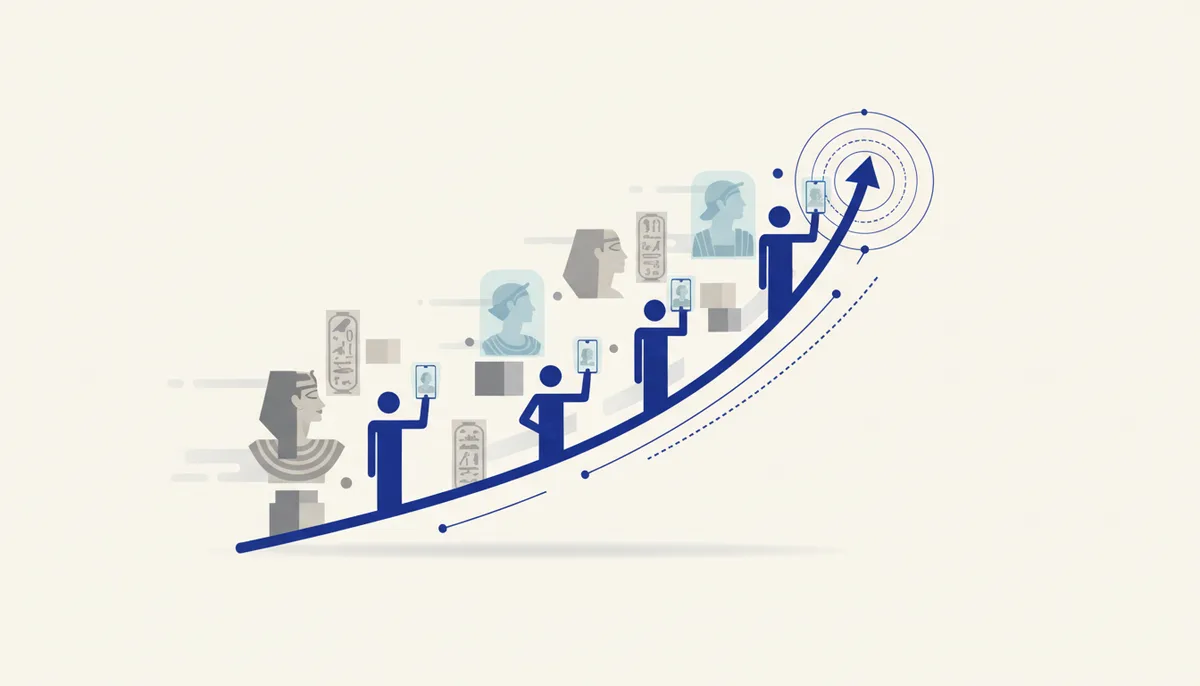
Historical selfies are a format where AI "brings the past to life": photoreal portraits of Socrates, Cleopatra or Newton "as if alive", or a "selfie" of the user standing next to a historical figure. The past stops being a painting and becomes a person.
Where it came from
- The roots are in tools like MyHeritage AI Time Machine ("you across different eras").
- Text-to-image models made it possible to turn a bust or a painting into a photorealistic face.
- Creators (Hashem Al-Ghaili, for one) pulled in millions of views with series like "icons of history, alive".
Why it took off
- Strong emotional pull: "so that's what they actually looked like" — a bridge between eras.
- Educational hook: history sticks better through a face than through a textbook.
- "Selfie with a legend" adds a personal layer — you immediately want to try it on yourself.
How to use it now
- Education and content: a series of "revived" figures is a powerful retention format for a niche channel.
- Prompt skeleton:
photorealistic portrait of <figure>, based on historical likeness, natural lighting, modern photo. - Tie it to facts: the visual grabs attention, but the value comes from accurate historical context.
What to watch out for
- This is an artistic reconstruction, NOT a document: the model invents the appearance — say so honestly.
- Risk of pseudo-history: a "revived" image is easy to mistake for fact — cite your sources.
- Sensitive and religious figures are a zone of respect and potential conflict.