What it is
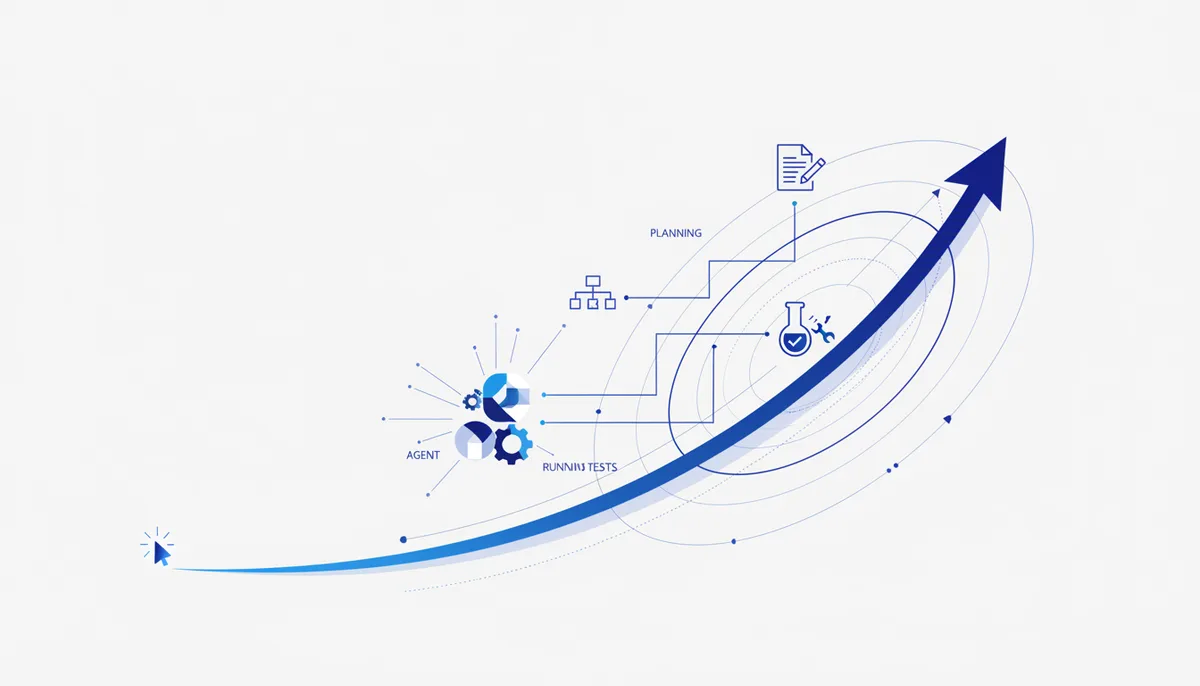
Agentic coding is an approach where an autonomous agent takes a high-level task, breaks it into steps itself, and edits multiple files, runs commands and tests, reads the errors and fixes them - with minimal human intervention. The key difference from autocomplete: the "wrote it → checked it → fixed it" feedback loop is closed.
Autocomplete (Copilot-style) is a single pass: it predicts the next line, and that's it. An agent works at the project level: it reads the codebase, plans multi-file changes, executes them, runs the test suite and clears the failures.
Where it came from
- The roots are in the Devin experiment (Cognition, "the first AI engineer", early 2024) and in SWE-bench, which showed that models really can close GitHub issues.
- 2025 - the category took shape: Claude Code, OpenAI Codex, Cursor Agent, Cline, Aider and OpenHands started handing the agent the whole cycle instead of a single line.
- The terminology was locked in by vendor docs (Google Cloud, Anthropic) and benchmarks (SWE-bench, Terminal-Bench).
Why it took off
- Models learned to call tools reliably (invoke the compiler, read stderr, retry) - without that an agent doesn't work at all.
- The "edit → test → fix" loop removes autocomplete's biggest pain: code that looks right but doesn't run.
- Economics: a single "fix the bug and open a PR" command saves the developer a context switch.
How to apply it now
- Give the agent a measurable goal: "tests green", "the endpoint returns 200" - it needs a way to check itself.
- Provide a way to verify: lint/test commands in the project (see the AGENTS.md card).
- Don't interrupt at every step - let it reach a decision point, then review the diff rather than every line.
What to watch out for
- An agent will confidently "fix" a symptom without understanding the cause - you need an external quality gate (review, tests).
- If you give it the right to run commands, give it a sandbox too: an autonomous agent with shell access is dangerous without isolation.
- On large repositories the agent drowns in context - context engineering and sub-agents help.