"No clients, no name, no budget" — that is how almost everyone starts. Below is an honest 7-step system for reaching your first paying clients from zero: with no ad money, on free tools and AI that takes the grind off your hands.
🧭 The whole picture
The core idea: clients do not come from a "magic channel", they come from a system: a clear offer → who to show it to → how to reach them → how to close → how not to lose them and turn it into a flow. AI does not replace the system, but it removes 80% of the grind — research, copy, personalisation, handling objections.
What you end up with: a working funnel from zero to your first paying client — an offer, a list of people to write to, first-touch templates, a conversation script, a free CRM for follow-up, and the habit of measuring what actually brings clients in.
Straight talk up front: this is not a money button. First clients from cold channels come slowly, there will be plenty of rejections, and no AI will sell for you — it speeds you up, but you are the one talking to people and deciding.
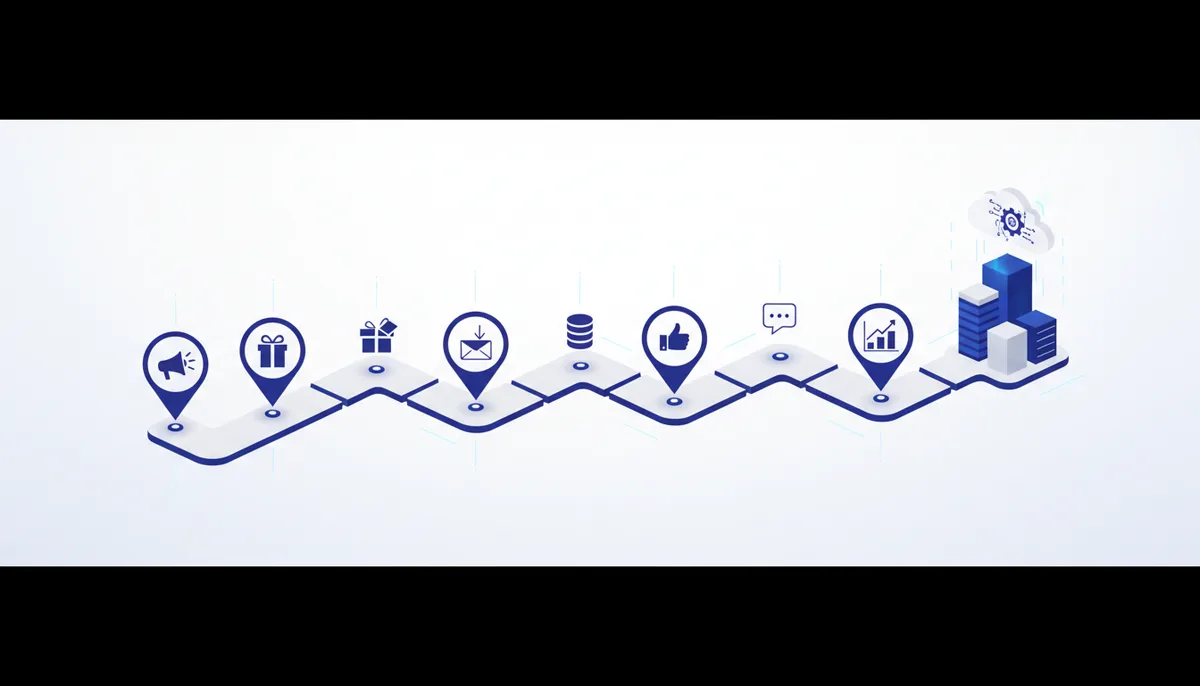
The 7-step pipeline: niche+offer → trust anchors → lead list → first touch → conversation and close → CRM and follow-up → measurement and referrals. Swap the tools inside freely — stick to the logic.
Step 1. Niche and offer: who you sell to and what
What we do: narrow down to one segment and one pain. "I build websites" — no; "I build a landing page in 3 days for nail technicians so bookings come in from Instagram" — that is an offer. A narrow segment is easier to find, easier to write to, and you become an insider faster.
AI is your sparring partner here: describe what you can do and ask it to put together several narrow segments and an offer for each — with the pain and the result.
🤖 "I can do
. Suggest 5 narrow niches where this is in demand and people pay. For each: who the client is, their main pain, what result I promise (in money/time), why they would pick me. Be specific."
How to tell it worked: the offer fits in one sentence, and it immediately says who it is for, which pain it solves and with what result. A stranger gets it on the first read.
Common mistakes:
- "I work with everyone" → nobody remembers or refers you. One segment at the start.
- An offer about the process ("I write code") instead of the result. Clients pay for the result — but do not invent numbers you do not have yet.
Step 2. Trust anchors: portfolio and lead magnet
What we do: a beginner has no case studies — so create them. Put together 1–2 demo projects for the niche (as if for a real client) and one lead magnet: a free checklist, a mini-audit or a teardown that is useful on its own. That is your social proof from zero.
AI helps fast: the structure of the case study, the checklist copy, mini-audit ideas. You build the demo project (landing page, bot, design) yourself — it is the proof of skill.
🤖 "Draft the structure of a lead magnet for
: a 7-point checklist that solves and shows my expertise. Plus an idea for a free mini-audit that leads naturally into a paid service."
How to tell it worked: you have something to show behind a link (demo + lead magnet), and someone from the niche says "that's useful". The lead magnet delivers value immediately, not "leave your contact and wait".
Common mistakes:
- Waiting for a "real" client before building a portfolio. Build the demo yourself — today.
- A hollow lead magnet that only harvests contacts. Give real value — then they will believe in the paid work too.
Step 3. The list: who to write to (lead gen)
What we do: build a list of concrete prospects — name, company, contact, a hook for personalisation. 20–50 quality leads beat a thousand shots into the void.
Where to get them free:
- Apollo.io — a free-forever plan (Starter): company and contact search, starter credits. Enough to test a niche and assemble your first lists (for real volume you need the paid tier).
- Search on LinkedIn / Instagram / Telegram by niche, Google Maps / 2GIS for local businesses.
- AI for qualification: from the descriptions, filter out who is genuinely your client and find a hook (a recent post, a weak spot on their site).
🤖 "Here are 10 prospects from
(data below). For each: do they fit my offer , and one concrete hook for a personal message. As a table."
How to tell it worked: the list holds real people/companies your offer is relevant to, and each one has a personal hook (not "hello, I offer services").
Common mistakes:
- Lists of thousands with no filtering → spam and bans. Fewer, but sharper.
- Collecting forever and never writing. You have 20 leads → move to step 4.
Step 4. First touch: write like a human
What we do: a short personal message for each one: hook → what is in it for them → a soft next step (not "buy", but "want me to show you / send you a teardown?"). AI gives you the draft and the scale of personalisation, but you send it, from your own account, and you proofread every one.
🤖 "Write a short first message for
, the hook: . The formula: an opening line about them → what I can help with → a soft invitation question. No corporate stiffness, no 'unique offer'. 3–4 sentences."
Straight talk about cold channels (important):
- This is not a mass blast to thousands. Bulk identical messages → bans, spam folders, reputational damage.
- Respect platform rules and the law: unsolicited outreach breaches social network ToS, email regulations and personal-data law (in Russia — 152-FZ). Write targeted and relevant messages, and give people a way to opt out.
- Personalisation ≠ inserting a name. The hook has to be real.
How to tell it worked: the message reads in 10 seconds, it is about the client (not about you), and it makes you want to reply. The first replies start coming — even "no thanks" is a signal that it lands.
Common mistakes:
- A wall of text about yourself and your services → ignored. The first touch is about them and one benefit.
- One template for everyone → visible a mile off. Adapt it to the hook.
Step 5. Conversation → offer → close
What we do: turn a reply into a conversation (chat/call), listen to the pain, show how you solve it, name the price and the next step. Beginners drown in the fear of "selling" — preparation cures it.
AI is your simulator: run the dialogue and drill the objections "too expensive / I'll think about it / we already have a contractor" before the call.
🤖 "Play a client from
who is sceptical about a beginner. I sell for . Throw real objections at me one at a time, I answer — then break down where I lost it and how to respond more strongly."
How to tell it worked: you can name the price and the next step calmly, without mumbling. After the conversation the client knows exactly what they get, for how much and when.
Common mistakes:
- Consulting for free forever without ever proposing paid work. Give value — then propose the next step directly.
- Hiding the price. Say it honestly — it saves both of you time.
Step 6. CRM and follow-up: a system, not one-off touches
What we do: set up a free CRM and track every contact: status, what you promised, when to follow up. Most deals close not on the first touch but on the follow-up — without a system you simply lose them.
- HubSpot CRM — free forever (up to 2 users, no card): contacts, a deal pipeline, reminder tasks, email tracking, meeting links. For starting out solo it is more than enough — and it is the proof that you can stand up a system for 0 ₽.
- Not a fan of HubSpot? Any free board will do (Notion / Trello / even a spreadsheet), the point is one single place plus reminders.
🤖 "Draft a follow-up plan for a lead who said 'interesting, but later': how many touches, at what intervals, with what reason for each (value, not 'so, any decision?'). 4 touches over 3 weeks."
How to tell it worked: not one warm contact is forgotten — each has a status and a date for the next touch. You see a pipeline, not "somewhere in my DMs".
Common mistakes:
- "Wrote once, no reply, gave up." The money is in the follow-up: come back with something useful two or three more times.
- Keeping it all in your head and in chat threads → you lose leads. Set up a CRM from the very first lead.
Step 7. Measurement, reviews and referrals: spin the flywheel
What we do: look at which channel actually produced replies and clients — and pour your energy there. From your very first client, get a testimonial and ask for a referral: word of mouth is warmer and cheaper than any cold channel.
🤖 "Help me ask my first client for a testimonial and a referral without being pushy. Give me a short message: thank them, ask for a couple of lines about the result, and ask who else might find this useful."
How to tell it worked: you know which channel works for you (not "somewhere, I think"), you have 1–2 real testimonials, and the first referred lead has shown up. The flywheel is turning.
Common mistakes:
- Spreading yourself across every channel at once. Find the one that works — go deeper.
- Not asking for a testimonial or a referral. A happy client almost always says yes — you just have to ask.
⚠️ Common mistakes and warnings
- Waiting for perfect instead of acting. The perfect site/portfolio/offer is a trap. Launch at "good enough" and fix it from feedback.
- Spam instead of outreach. Bulk identical messages breach platform rules and the law (in Russia — the personal-data law 152-FZ), and they destroy your reputation and your domain. Targeted and relevant only, with a way to opt out.
- Invented case studies and numbers. "+300% sales" with no proof = lost trust. Label a demo as a demo, and promise what you will actually deliver.
- AI writes, you do not read. The model hallucinates facts and names with total confidence. Check every outgoing message and every number yourself.
- Private data in AI. Do not upload other people's personal or commercial data into cloud models without a legal basis.
- One channel is not your whole life. A platform changes its rules or bans you — but the system (offer + CRM + word of mouth) stays with you.
🧠 For the senior / once it starts working
- Niche domination: instead of "more channels", go deeper in one segment: recognition, case studies, higher prices, inbound that arrives on its own.
- Content as an inbound stream: turn case studies and teardowns into posts and videos (see the content and faceless-video skills) — over time clients come to you and cold outreach fades into the background.
- Productise the service: a fixed offer with a clear result and price sells more easily than hourly work and is far easier to delegate.
- Automate the follow-up: templates, tasks and reminders in the CRM, some of it on bots (see the no-code Telegram bot guide), but keep the personalisation and the decisions to yourself.
- Do the unit economics: how many touches per client, which sources are cheapest and best — invest in the channel with the best return and cut the rest.
🆘 Rescue prompt
Help me get my first clients from scratch, step by step, honestly and without fluff.
I CAN DO: <skill>. NICHE/OFFER: <if any>. BUDGET: minimal.
WHERE I AM STUCK: <niche? lead list? first message? closing? follow-up?>.

What to do:
1) Help me finish the current step: offer → trust anchors → lead list → first touch → conversation/close → CRM/follow-up → testimonials/referrals.
2) Give me concrete wording (offer, message, follow-up) for my niche.
3) Warn me where this borders on spam / platform rules / the law — and how to do it ethically.
4) Do not invent numbers or case studies for me — if you lack the data, ask or label it as a demo.
💎 Depth and value
- The skill of getting clients matters more than any craft. Code, design and copy get cheaper and more automated; the ability to find the people you are useful to and reach an agreement does not. Learn it once and you will never be short of work.
- A system beats inspiration. "Where do I get clients" is googled in a panic right before a slump; the people with a funnel in place (offer + list + follow-up + word of mouth) just keep spinning the flywheel. Boring and reliable > flashy and one-off.
- AI is an amplifier, not a substitute. It takes the grind (research, copy, personalisation), but trust, the conversation and the result are on you. Whoever combines AI speed with human honesty outruns both the fully manual crowd and the people spamming generated text.