When to use it
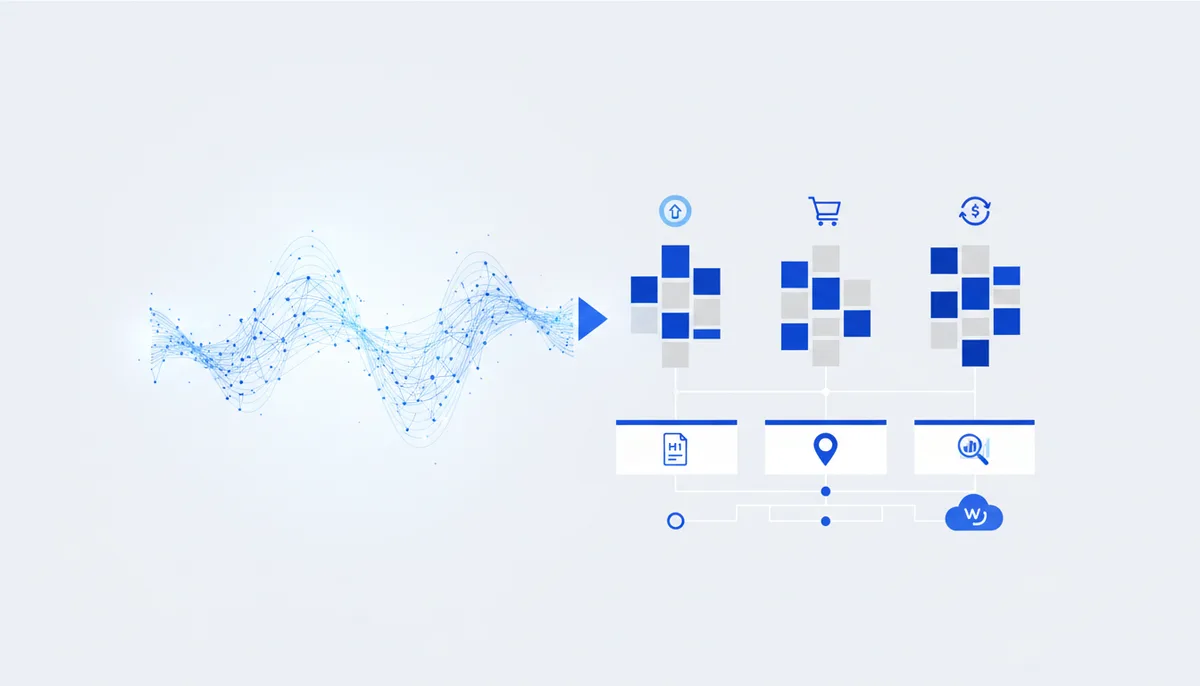
When you have a topic or a niche and you need a keyword set built as clusters mapped to site structure — not as a flat list: what deserves its own page, under which intent, with which heading. The role here is SEO specialist. Output: keyword clusters by intent + a "cluster → URL → H1 → content type" map. Real search volumes you pull from Wordstat / Keyword Planner.
The prompt (copy and paste)
You are an SEO specialist who thinks in clusters and intent, not in word lists.
TOPIC/NICHE: "<PASTE>". REGION/LANGUAGE: <e.g. Russia, Russian>. SITE TYPE: <blog / online store / services / SaaS>.
WHAT WE SELL / WRITE ABOUT: "<briefly>". COMPETITORS (if I know them): <…>.

Do this:
1. Expand the topic into a broad list of queries (including synonyms, "how / what / where" phrasings, long tail, and negative keywords — traffic that is NOT ours).
2. Group the queries into CLUSTERS by meaning. For each cluster, state the search intent: informational (learn) / commercial (choose-compare) / transactional (buy-order) / navigational (brand).
3. Build a content map table from the clusters: Cluster · Intent · Head query · Page type (article / category / landing / product) · Draft H1 · Idea of what the page must contain.
4. Mark cluster priority (where results come fastest: lower competition, closer to money) and which clusters must not share a page, to avoid cannibalization.

You definitely don't know real search volumes or difficulty — do NOT invent numbers. Where a demand estimate is needed, mark it "check in Wordstat/Keyword Planner".
Filled-in example
Topic: "orthopedic mattresses". Region: Russia. Type: online store. We sell mattresses and sleep accessories.
Expected AI response: a broad list + negative keywords ("free", "DIY"); clusters — "how to choose an orthopedic mattress" (info → guide article), "mattress for back pain" (info/commercial → article + curated selection), "buy orthopedic mattress
Variations
- Content plan from the keyword set. "Turn the info clusters into a plan of 10 articles: title, H2 subheadings, which query each one covers."
- For a single page. "Gather LSI terms and sub-queries for ONE cluster so the page covers it as fully as possible."
- Competitor analysis. "Here's a competitor's URL/export — which clusters do they cover and where's our gap."
Pro tips
- The real value is the intent and the "cluster → page" map: one page targets one intent, otherwise it's about nothing and loses. Don't try to serve an info query and a transactional one with the same page.
- The AI doesn't know real volume or competitiveness — those are hallucinated numbers. The list and the clustering are valuable, but confirm demand in Wordstat/Keyword Planner and difficulty in an SEO tool.
- Long tail and "pain" phrasings often convert better than head terms — ask the AI not to forget the tail and the negative keywords, so you don't pull in traffic you don't want.