What it is
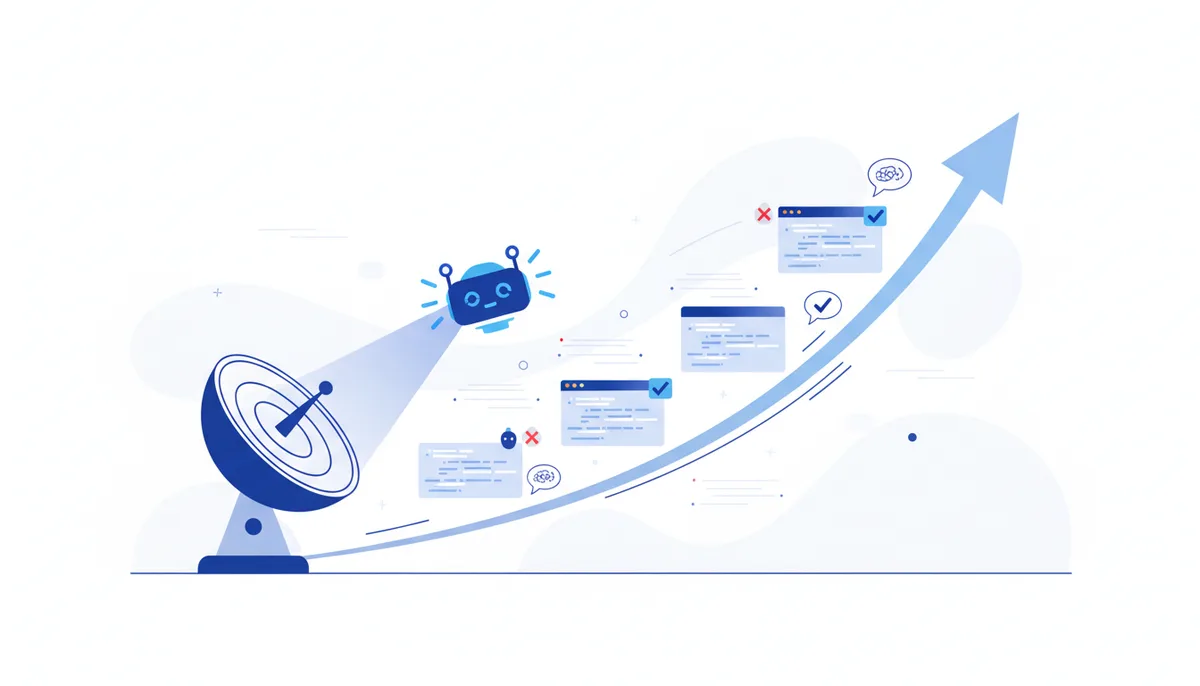
AI code review is an automated agent that, when a pull request opens, reads the diff in the context of the whole codebase, spots bugs, performance issues and style problems, leaves inline comments and sometimes suggests fixes. It doesn't replace a human — it catches the routine stuff before a reviewer ever gets to it.
Where it came from
- 2024–25 — CodeRabbit, Greptile, Ellipsis and Sourcery turned the "AI linter" into a full reviewer that understands the code graph.
- April 2025 — GitHub launches Copilot for Pull Requests (Copilot Code Review) and by November 2025 overtakes CodeRabbit in the number of PRs touched.
- CLI and IDE variants plus MCP integration appeared — review moved into the local workflow.
Why it took off
- Agent-written code grew several times over — humans physically can't review it all; AI review became a necessary valve.
- Coverage: per 2025 measurements CodeRabbit catches ~52% of issues versus ~37% for Copilot — the bot really does find bugs, not just tidy things up.
- Scale of trust: 2M+ repositories and 13M+ PRs through CodeRabbit show this is infrastructure now, not an experiment.
How to use it today
- Turn an AI reviewer on for the repo as a required step before merge.
- Use it as the "first pass": the bot clears the small stuff, the human looks at architecture and intent.
- Configure rules and context (what matters in your specific project), otherwise you get noise.
What to watch out for
- False positives and nitpicking wear people down — without tuning, the team starts ignoring the bot.
- AI review doesn't catch design flaws or architectural security problems — that's still human territory.
- A reviewer with repo access is a potential injection vector (malicious code or a comment inside a PR).