What it is
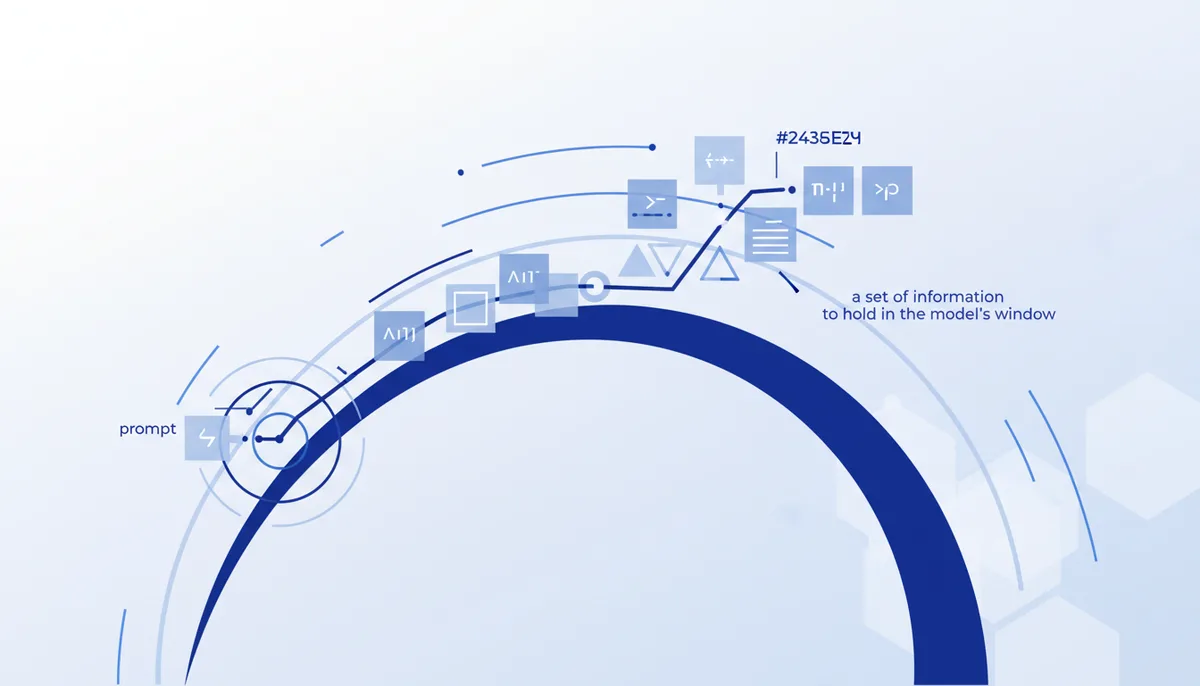
Context engineering is the art and science of curating the optimal set of tokens (information) that sits in the model's window at inference time: system instructions, tools, external data, message history, dynamically retrieved facts. The question moves from "how do I word the prompt" to "what information and what environment do I give the model so the task becomes solvable".
Where it came from
- June 19, 2025 — Tobi Lütke (CEO of Shopify) coined the term in a tweet: "the art of providing all the context for the task to be plausibly solvable by the LLM".
- 2025 — LangChain gave it a programmatic definition; Anthropic cemented the concept in its engineering docs (article of 29.09.2025); Google built context pipelines into ADK.
Why it took off
- For agents that run many steps, one prompt isn't enough: the model remembers nothing outside the window. You have to manage state and memory.
- The window is finite: what's in it and what gets evicted directly drives quality and cost.
- It's the natural continuation of prompt engineering for the era of long agentic tasks.
How to use it today
- Think in terms of a context budget rather than the perfect prompt: what must always be there, what gets pulled in on demand, what gets dropped.
- Use sub-agents and external memory so a single window doesn't balloon.
- Structure the input: instructions, relevant files, history — not a dump of everything.
What to watch out for
- "More context" isn't "better": the extra material blurs focus (context rot) and burns tokens.
- Curation is an iterative process at every agent step, not a one-time setup.
- Sensitive data in the context is a leak risk; don't put in what you don't need.