What it is
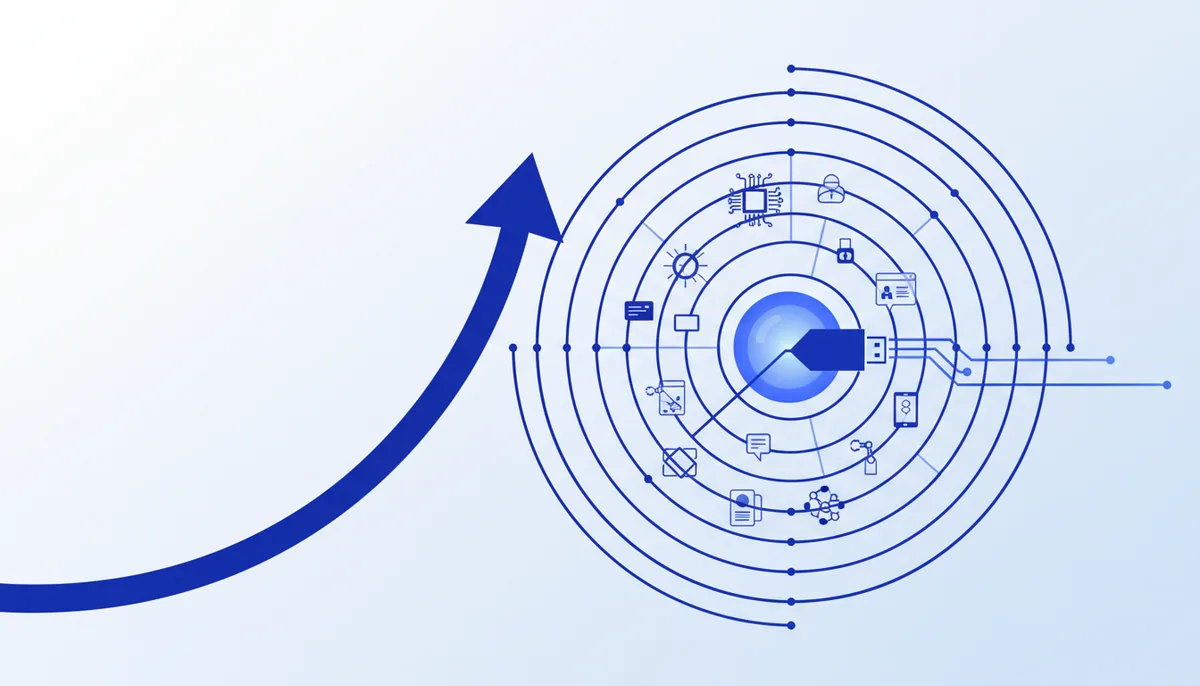
Model Context Protocol (MCP) is an open standard for connecting AI agents to external tools and data: files, databases, APIs, repositories. The metaphor that stuck in the community is "USB-C for AI": one port instead of N custom integrations. The agent stops working in a vacuum and gets hands.
Where it came from
- November 25, 2024 — Anthropic announced MCP (authors David Soria Parra and Justin Spahr-Summers) with SDKs for Python, TypeScript, C# and Java.
- March 2025 — OpenAI officially adopts MCP (including the ChatGPT desktop app).
- April 2025 — Google DeepMind (Demis Hassabis) confirms MCP support in Gemini.
- December 2025 — Anthropic hands MCP to the Agentic AI Foundation under the Linux Foundation (together with Block and OpenAI) — the protocol becomes vendor-neutral.
Why it took off
- It solved a real M×N pain: previously every tool × every client meant its own integration; MCP collapsed that into a single contract.
- Openness plus fast buy-in from the three biggest labs equals a network effect: thousands of servers appeared within months.
- Moving it under the Linux Foundation removed the vendor lock-in fear and accelerated enterprise adoption.
How to use it today
- Wire 2–3 MCP servers into your agent for the jobs you actually do (GitHub, a read-only database, search) — see the "🔌 MCP" section.
- For your internal systems, write your own MCP server — the agent instantly learns to work with them.
- Stick to least privilege: read-only wherever writes aren't needed.
What to watch out for
- By design MCP encourages mixing tools from different sources — a direct path to the "lethal trifecta" (see the agent security card).
- Supply chain: install servers from the official registry or trusted repos, and check the package name (typosquatting is real).
- The standard is young — the spec is still evolving; keep an eye on versions.